
Accepting card payments has become essential for businesses that want to offer customers convenient, reliable and secure ways to pay. From online retailers and hospitality businesses to professional service providers, an efficient payment system can support smoother transactions and improve the customer experience. Payment 247 helps businesses explore payment solutions suited to their operational needs. Choosing the right Credit Card Processing UK solution can make it easier to accept payments, manage transactions and support business growth.

What Is Credit Card Processing?
Credit card processing is the system that enables businesses to accept card payments for goods and services. When a customer pays using a credit card, payment information passes through several parties, including the payment gateway or terminal, the acquiring bank, the card network and the card issuer.
Payment 247 can help businesses understand the payment solutions available for different sales environments, including in-person and online transactions. The right setup depends on factors such as business size, transaction volume, customer preferences and the systems already in use.
Although the process usually takes only a few seconds, several security checks and communication steps take place behind the scenes to authorise a payment and communicate the result.
How Credit Card Processing Works
Understanding the payment process helps businesses make informed decisions when selecting a provider. Although the exact setup varies, most card transactions follow a similar sequence.
- Payment initiation: A customer enters their card details online or presents their card to a payment terminal.
- Secure transmission: The payment information is transmitted through the relevant payment system, using appropriate security measures.
- Authorisation request: The payment processor and card network route the request to the card issuer.
- Verification: The issuer checks factors such as available credit, card validity and potential fraud indicators.
- Approval or decline: The issuer returns an authorisation decision.
- Settlement: Approved transactions are subsequently processed for settlement, with funds transferred to the merchant according to the provider’s arrangements.
Authorisation does not necessarily mean that funds have already reached the business bank account. Settlement times depend on the provider, transaction arrangements and applicable banking processes.
Benefits of Credit Card Processing for UK Businesses
Offering card payments can help businesses serve customers more effectively while simplifying the payment experience.
Greater Customer Convenience
Customers increasingly expect businesses to accept credit and debit cards, whether they are shopping online, visiting a store or paying for a service. Providing familiar payment options reduces friction at checkout and gives customers more flexibility.
Faster Transactions
Contactless payments and integrated online checkout systems can help reduce the time required to complete purchases. Faster payment experiences may be particularly beneficial for busy retail environments, cafés and other businesses handling frequent transactions.
Improved Sales Opportunities
Accepting cards allows businesses to serve customers who prefer not to carry cash. Online card processing also enables businesses to receive payments from customers without requiring face-to-face interaction.
Easier Transaction Management
Many payment platforms provide transaction histories, reporting tools and reconciliation features. These functions can help businesses review sales, monitor payment activity and compare transaction records with their accounting systems.
Support for Business Growth
A suitable payment setup can accommodate changing customer needs as a business expands. Depending on the provider, businesses may be able to add online payments, additional terminals, recurring billing or other payment features without completely changing their existing processes.
Security Considerations for Card Payments
Payment security is a major consideration for any business that accepts credit cards. Poor security practices can expose customers to fraud, compromise sensitive information and damage a company’s reputation.
Businesses should select payment solutions that use appropriate encryption and secure handling of payment information. They should also understand their responsibilities under relevant card-industry requirements and data protection laws.
Important security measures include:
- PCI DSS compliance: Follow the applicable Payment Card Industry Data Security Standard requirements for protecting payment card information.
- Secure payment gateways: Use reputable solutions that protect card information during transmission.
- Tokenisation: Where supported, replace sensitive card details with tokens for certain payment operations.
- Fraud monitoring: Use available fraud detection tools to identify suspicious transactions.
- Strong account security: Protect payment dashboards with strong passwords and multifactor authentication where available.
- Staff training: Ensure employees understand safe payment handling and how to recognise potential fraud.
Businesses should avoid storing sensitive card security codes and should never collect or retain payment information unnecessarily. The specific compliance requirements depend on how payments are accepted and how the payment environment is configured.
Online and In-Person Credit Card Processing
Businesses should choose payment solutions that match the way they sell their products or services.
Online Payments
E-commerce businesses typically use a payment gateway or integrated checkout system to accept card payments through a website or application. A well-designed checkout should be easy to navigate, work effectively on mobile devices and clearly communicate whether a payment has succeeded.
Businesses should also consider fraud prevention tools, support for recurring payments where needed, and integration with their online store or accounting software.
In-Person Payments
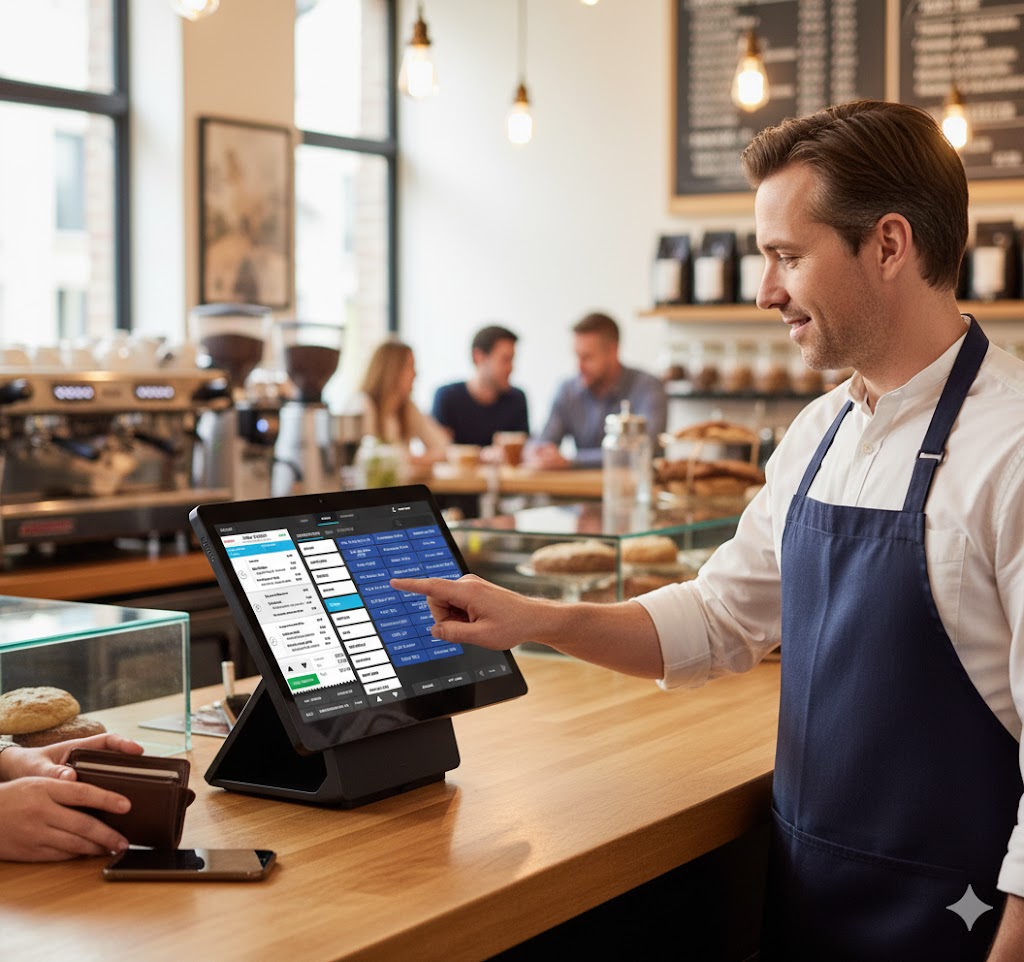
Retail shops, restaurants and service businesses may use physical payment terminals to accept chip-and-PIN, contactless and supported digital wallet payments. Integrated terminals can help connect payments with point-of-sale systems and reduce manual entry.
Some businesses benefit from mobile card readers that allow staff to take payments away from a fixed checkout counter.
Omnichannel Payments
Businesses that sell both online and in person may benefit from a payment setup that brings transactions together in a more consistent reporting system. The availability of unified reporting, customer records and integrations varies between providers.
Understanding Credit Card Processing Fees
Payment processing costs can affect profitability, so businesses should review the full pricing structure before choosing a provider.
Common costs may include transaction fees, monthly service charges, payment terminal rental, gateway fees and additional charges for particular services. Some providers use fixed fees, while others charge a percentage of each transaction or a combination of both.
When comparing Credit Card Processing UK providers, businesses should consider their average transaction value, monthly sales volume, refund levels and the proportion of card payments they expect to receive.
It is also important to review contract length, cancellation terms, settlement arrangements and any extra charges for chargebacks or international cards. Comparing the overall cost is generally more useful than choosing a provider based on one advertised rate.
How to Choose the Right Payment Processing Provider
Selecting a provider requires balancing cost, security, reliability and functionality.
Before making a decision, consider the following questions:
- Does the solution support your sales channels and preferred payment methods?
- Are the transaction fees and monthly costs clearly explained?
- Does the provider offer appropriate fraud prevention and security features?
- Can the system integrate with your website, point-of-sale software or accounting tools?
- Are settlement times and customer support arrangements suitable for your business?
- Can the solution accommodate future growth?
Reviewing these factors can help businesses identify a payment setup that fits their day-to-day requirements rather than paying for unnecessary features.
Frequently Asked Questions
What is required to accept credit card payments in the UK?
Most businesses need a merchant payment arrangement or suitable payment service, together with a compatible terminal or online checkout. Providers may also require business verification and other onboarding checks.
Are credit card payments secure?
They can be processed securely when businesses use suitable providers, follow applicable security standards and maintain appropriate fraud prevention practices. No payment system can eliminate every risk.
How long does it take to receive card payments?
Settlement times vary by provider, account arrangement, transaction type and banking processes. Businesses should confirm expected settlement schedules before signing an agreement.
Are online and in-store processing fees the same?
Not necessarily. Costs can vary according to the payment method, provider pricing model, transaction characteristics and additional services.
Conclusion
Choosing a suitable payment solution helps businesses accept customer payments efficiently while supporting security, convenience and reliable transaction management. From online checkout systems to in-person terminals, the right setup depends on business requirements, pricing, integration needs and risk management. By comparing providers carefully and understanding their responsibilities, businesses can choose a Credit Card Processing UK solution that supports daily operations and long-term growth.
Contact
Phone: +44 20 3556 1274
Email: [email protected]
Address: 59–60, Gainsborough House, Thames St, Windsor, SL4 1TX.